
Criminal Court Records in Payne County
A criminal court record is the case file the court opens once a charge is filed. In Payne County, the Court Clerk records, files, and keeps the permanent record of every District Court case. That file starts the day the State of Oklahoma brings a charge and grows with each step that follows. It holds the charging document, the appearances, the bond, the hearings, the plea, the disposition, and the sentence. It also tracks the costs and fees tied to the case. The arrest and booking side of a case sits with the Sheriff, but the court file is the official record of what the court did.
District Court is the trial court that hears criminal cases in Payne County, which sits in Oklahoma's Ninth Judicial District with Logan County. The court splits criminal matters into two main tracks. Felony cases carry a CF case number and cover the most serious crimes. Misdemeanor cases carry a CM number and cover lesser offenses. Felony dockets are held each Friday, while misdemeanor dockets run on a set rotation. City courts in Stillwater, Cushing, Perkins, and Yale handle municipal citations, and those city files are kept apart from the District Court case record.
How to Search Payne County Criminal Court Records
The main online path is the Oklahoma State Courts Network, known as OSCN. It is a free public site that holds docket and case information for the Payne County District Court. Self-searches cover cases from 1994 to the present. The court file remains the official record, so OSCN warns that its data should be checked against the Court Clerk's copy.
- Open the OSCN docket search and pick Payne County District Court from the county or court menu.
- Search by the defendant's name, or enter a case number such as a CF or CM number if you have one.
- Narrow the results by case type and filing date to find the right criminal case.
- Open the case to read the full docket, the charges, and the disposition.
- Request a certified copy from the Payne County Court Clerk when you need an official document.
Older files may not appear online. The Court Clerk runs an assisted search by mail, in office, or email for a $5 fee, and asks for the full name, date of birth, and the years to search. Some older criminal files are stored at an alternate site, so it helps to call the Court Clerk at (405) 372-4774 before a visit. For a wider view that covers civil and family matters too, the broader set of Payne County court records uses the same OSCN portal.
Stages of a Payne County Criminal Case
A criminal case moves through set steps, and each step leaves a mark in the court file. The case begins when the District 9 District Attorney's office reviews the police work and decides to file a charge. The DA's office, not the Sheriff, chooses what charge to bring and whether to bring one at all. Once the charge is filed, the court opens a case and the clerk starts the docket. Every hearing, motion, and order that follows is logged in order, so the docket reads like a timeline of the case.
Case flow: Charges Filed › Arraignment › Pretrial / Motions › Plea or Trial › Disposition › Sentencing
| Stage | What Happens |
|---|---|
| Arraignment | The defendant first appears, hears the charges, and enters an early plea. The court sets bond and advises the right to a lawyer. |
| Pretrial / Motions | Lawyers file motions, share evidence, and set hearings. Felony cases may include a preliminary hearing to test probable cause. |
| Plea or Trial | The defendant pleads, or the case goes to trial before a judge or jury. Most cases end in a plea rather than a trial. |
| Sentencing | After a guilty plea or verdict, the judge imposes the sentence and the clerk records it in the case file. |
A person who cannot afford a lawyer may ask the court to appoint one. Many Oklahoma counties without a local public defender are served by the Oklahoma Indigent Defense System, which provides legal counsel to people who qualify. The court reviews indigency as part of the criminal case process.
The Oklahoma Indigent Defense System home page shows how appointed counsel is set up statewide.
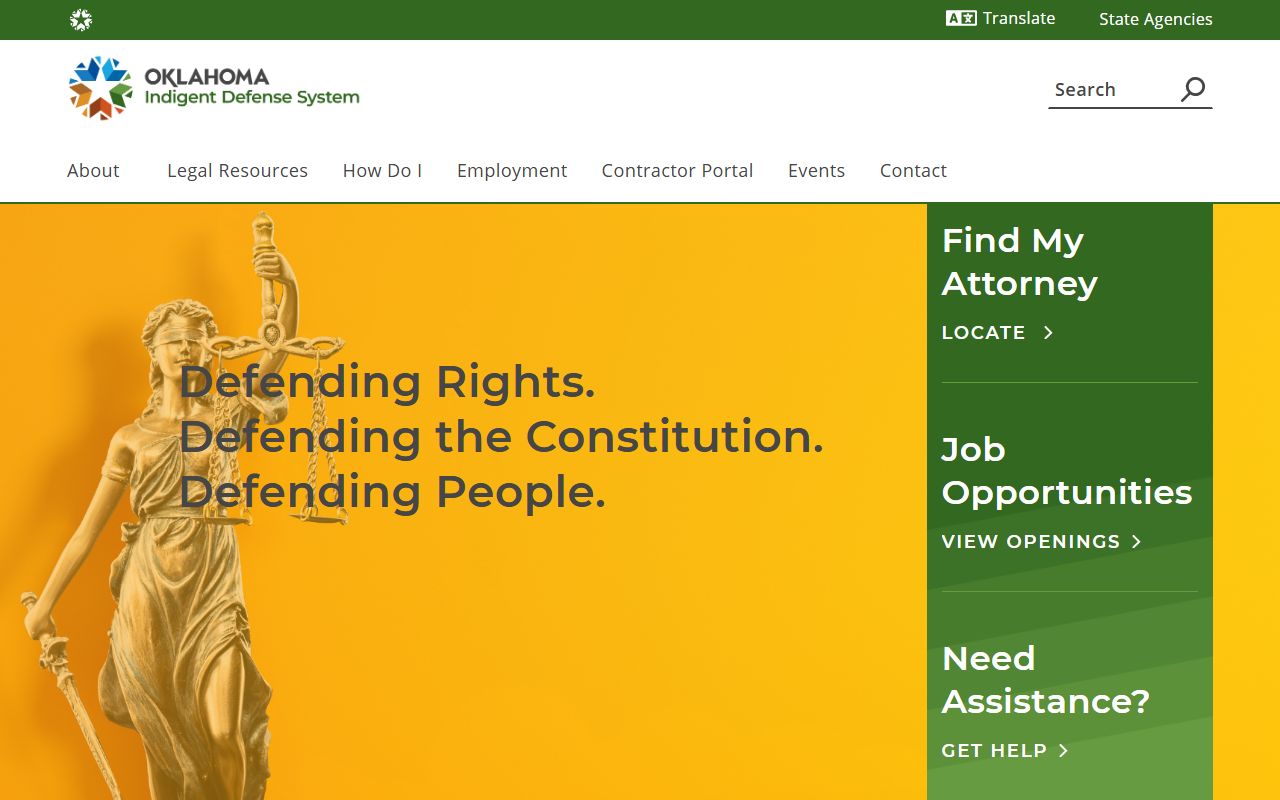
Appointed counsel appears in the case file as an entry of appearance, so the docket shows who represents the defendant at each stage.
What a Payne County Criminal Court Record Shows
A criminal case file packs a lot into one record. The header names the court, the case number, and the case type, such as Criminal Felony or Criminal Misdemeanor. It shows the filing date and, when the case is closed, the closed date. The body lists the parties, the lawyers, and a dated list of every docket event. Many entries link to a scanned document, while others note that the paper is held at the Court Clerk's office. A cost ledger tracks fines, court costs, clerk fees, and assessments tied to the case.
| Field | What It Shows |
|---|---|
| Case Number | The court's ID for the case, with a prefix such as CF for a felony or CM for a misdemeanor, plus the year and a sequence number. |
| Defendant | The person charged. The State of Oklahoma is named as the plaintiff in every criminal case. |
| Charges | Each offense the State filed, with the statute and a short charge description. |
| Plea | The defendant's formal answer, such as guilty, not guilty, or no contest. |
| Disposition | How the court resolved each charge, such as convicted, dismissed, or acquitted. |
| Sentence | The punishment imposed after a conviction, such as jail time, probation, fines, or a deferred term. |
The docket also logs bond, preliminary-hearing settings, continuances, minute orders, and any warrants or revocations filed in the case. Note: an OSCN entry is not the official record, so a certified copy from the Court Clerk is needed for any legal use.
Charges vs. Convictions
Being charged is not the same as being found guilty. A charge is only an accusation by the State. A conviction is a finding of guilt, by plea or verdict, after the case has run its course. A criminal court record can show charges that were dropped, reduced, dismissed, or that ended in acquittal. Reading the disposition on each charge is the only way to tell what truly happened. For a closer look at how the State files and changes the counts in a case, the Payne County arrest records and court charges page covers the charging side in depth.
| Charge | Conviction | |
|---|---|---|
| Stage | Accusation at the start of a case | Verdict or guilty plea at the end |
| Burden of Proof | Probable cause | Beyond a reasonable doubt |
| Can Change | May be amended, reduced, or dropped | Final unless appealed or vacated |
| Public Record | Yes | Yes |
Reading Payne County Dispositions and Sentences
The disposition is the heart of a criminal case file. It tells you the result of each charge. A sentence then spells out the punishment that follows a guilty plea or a guilty verdict. Oklahoma case files use a handful of common terms, and knowing them makes the record clear. A deferred sentence, for example, can lead to a dismissal if the defendant meets all the terms, so the same case can look very different at filing and at close.
- Guilty
- A plea or finding that the defendant committed the crime.
- Not Guilty
- A plea denying the charge, or a verdict that the State did not prove its case.
- No Contest (Nolo)
- The defendant does not admit guilt but accepts the punishment.
- Dismissed
- The charge is dropped. With prejudice it cannot be refiled; without prejudice it may return.
- Deferred
- The court delays judgment while the defendant meets set terms, often ending in dismissal.
- Probation
- Supervised release in place of, or after, jail or prison time.
A sentence to prison routes the person into the state corrections system. The Oklahoma Department of Corrections offender lookup tracks people serving a state sentence, which the county court file does not follow once custody shifts to the state.
The Oklahoma DOC offender search returns the current status of a sentenced person statewide.
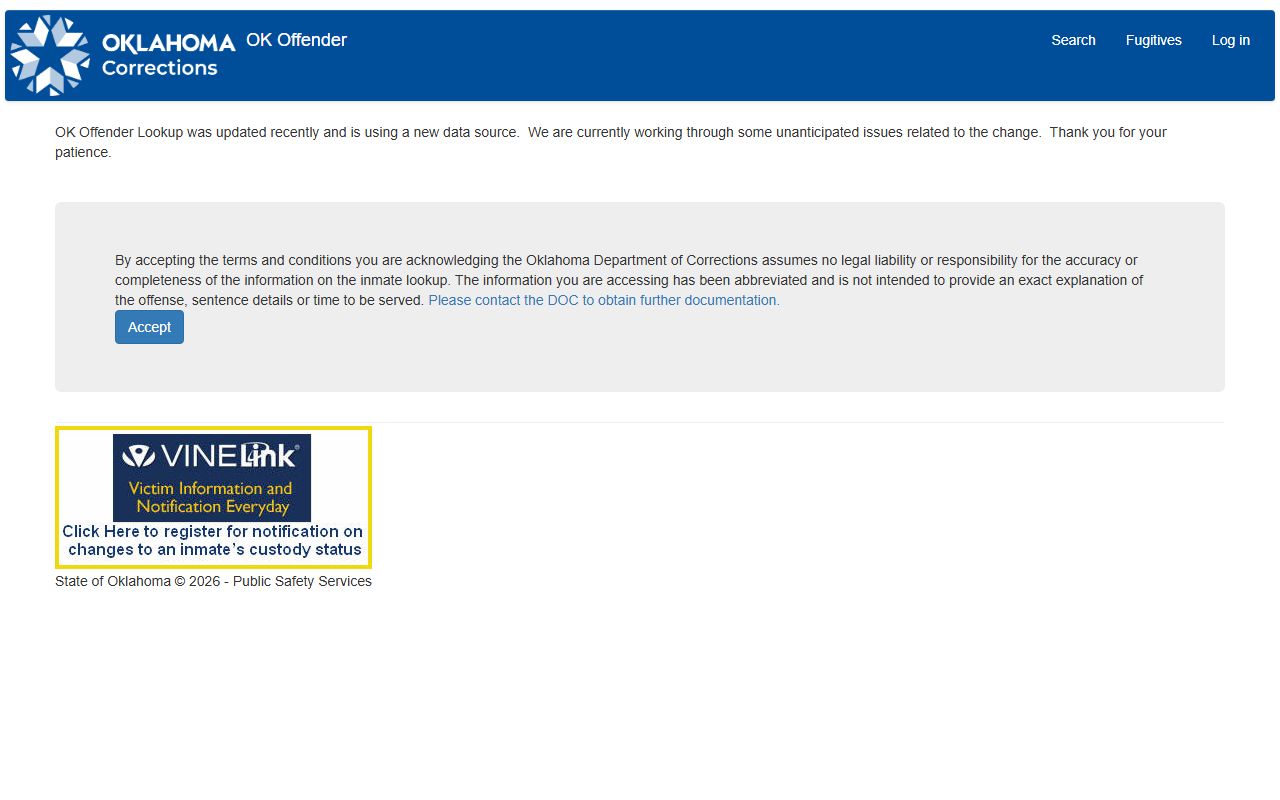
The DOC site warns its data is abbreviated, so the District Court judgment and sentence stays the source for the exact terms of a Payne County case.
Sealed vs. Expunged Records
People often use these two words as if they mean the same thing. In Oklahoma practice, sealing hides a record from public view while the file still exists for limited official use. Expungement goes further and treats the record as if it never happened for most purposes. An Oklahoma expungement is filed in District Court when the person fits one of the categories set out in the statute. The court then decides whether the record should be sealed.
The statute that governs this process is posted on the official Oklahoma statutes site as 22 O.S. § 18.
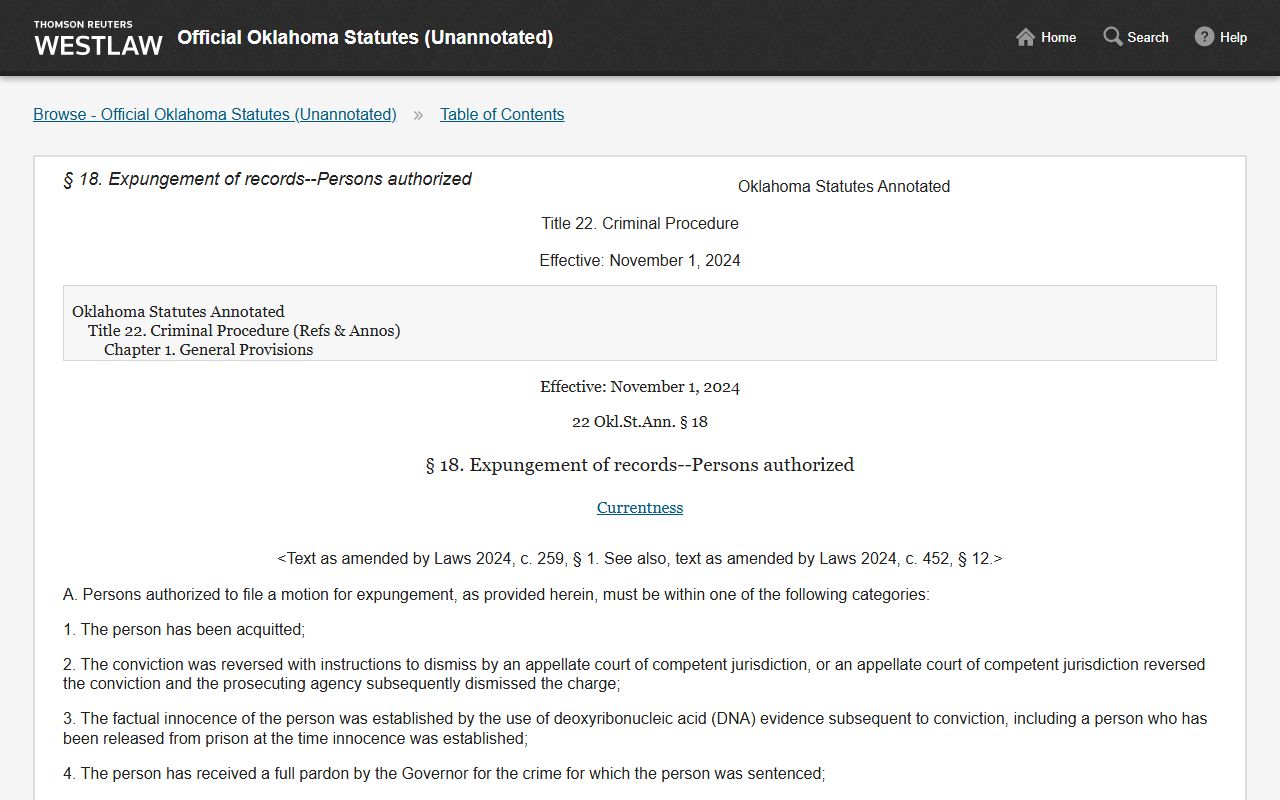
That statute lists the categories of people who may petition to seal a criminal record, and a petitioner must match the facts of the case to one of them.
The state criminal-history side is handled by the Oklahoma State Bureau of Investigation. Its criminal-history expungement page is a key source because it states plainly that the OSBI cannot pre-approve eligibility.
The OSBI page points petitioners back to the statute and to the court, since eligibility turns on the law and the case facts, not on staff approval.
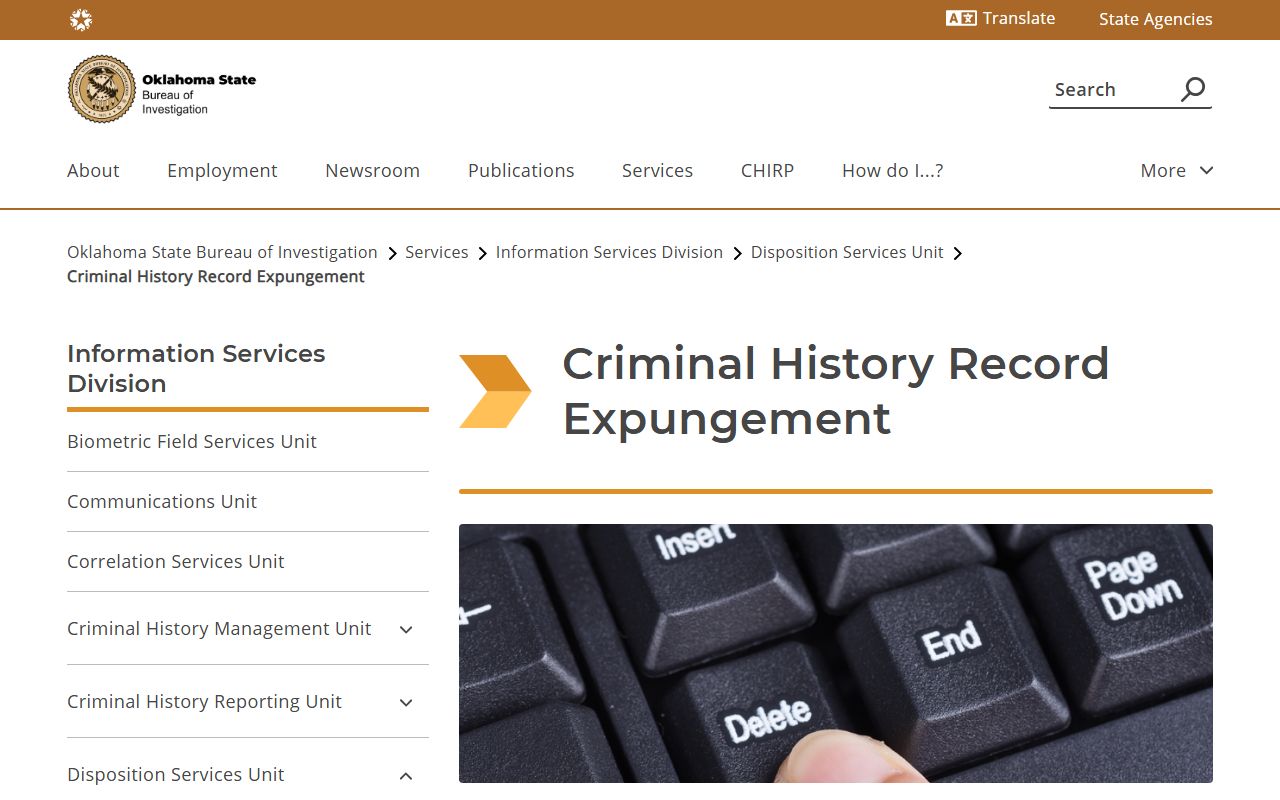
A granted order can affect both the court file and related criminal-history repositories, but it does not erase every private copy that may already exist.
| Sealed | Expunged | |
|---|---|---|
| Visibility | Hidden from public view | Treated as if it never existed for most uses |
| Law Enforcement | Limited access remains | Very limited access |
| How It Starts | By court order | By petition filed in District Court |
| Eligibility | Set by court order in the case | Set by the categories in 22 O.S. § 18 |
Public Access to Payne County Criminal Records
Oklahoma law starts from the idea that court records are open. The Court Clerk states that all court records are open for public inspection except for a few protected categories. That means most criminal case files can be viewed by anyone, in person or through OSCN. The presumption of openness comes from the Oklahoma Open Records Act, and a court can still protect specific pleadings by order. E-filers are also warned to manage personal data, since filed documents may become viewable online.
Key Statutes:
Oklahoma Open Records Act, 51 O.S. § 24A.5 - public records are open during regular business hours unless a law makes them confidential.
Oklahoma Open Records Act, 51 O.S. § 24A.8 - law enforcement records carry their own access rule, separate from the court file.
Criminal Records and Background Checks
A casual case lookup and a formal background check are not the same thing. Reading a Payne County criminal court file online tells you what the court did. A formal background check used for hiring, housing, or credit must follow federal rules and use a screened, verified report. The OSBI handles official statewide criminal-history reports for that purpose. People convicted of certain offenses may also appear on the Oklahoma Sex Offender Registry, which is searched apart from the court docket.
The state registry lets the public search registered offenders by name or location across Oklahoma.
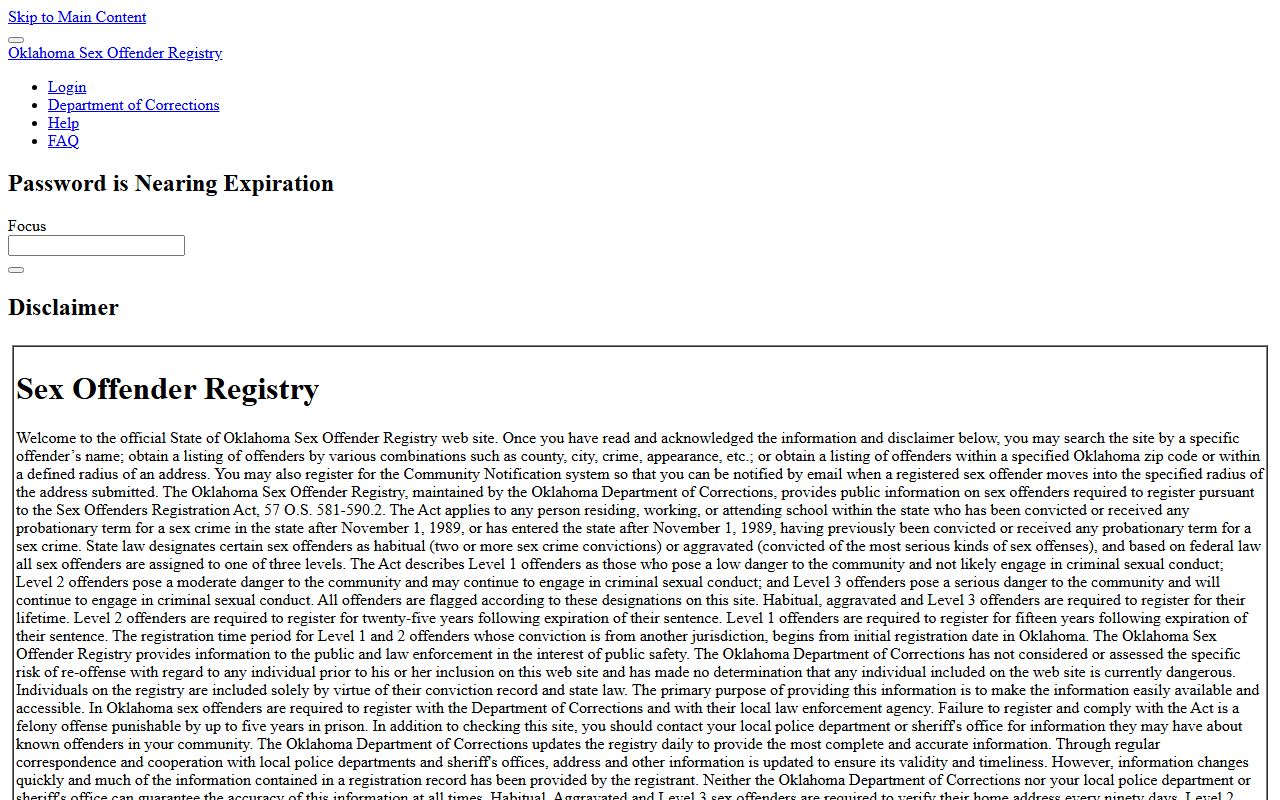
A registry hit reflects a conviction outcome, while the full charge and sentence detail still lives in the District Court case file.
Important: This website is not a consumer reporting agency under the Fair Credit Reporting Act, and its information may not be used for credit, employment, tenant, or insurance decisions.
Restricted Criminal Court Records in Payne County
Not every criminal-related file is open. The Court Clerk names several types of cases that are kept from public inspection. These rules protect children, patients, and people whose records have been sealed. A search may show that a case exists yet block the file itself, or the case may not appear at all. When a record is withheld, party status, a court order, or legal authority is usually needed to view it.
- Juvenile cases, including deprived and delinquent matters.
- Mental health proceedings.
- Adoption records.
- Guardianship matters, which the Court Clerk treats with care.
- Sealed and expunged criminal records under 22 O.S. § 18.
- Protected personal identifiers within otherwise public files.
For the official path on any of these, the Payne County Court Clerk is the right office to ask, since the clerk controls access to the District Court case file.